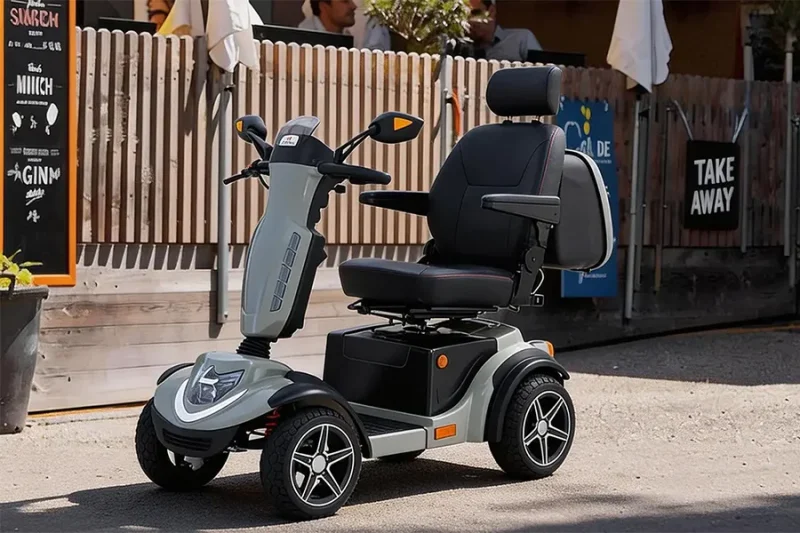

The electric mobility scooter industry is entering a new phase of growth in 2026. Aging populations, advancing battery technology, and stronger regulations are reshaping how manufacturers, dealers, and distributors compete worldwide.
Market Growth and Demographics
The global electric mobility scooter market was valued at USD 1.59 billion in 2025. It is projected to grow from USD 1.71 billion in 2026 to USD 3.43 billion by 2034, with a CAGR of approximately 9%.
The portable mobility scooter segment is also expanding. It is expected to grow from USD 5.7 billion in 2025 to USD 6.39 billion in 2026.
Demographics remain a key driver. By 2030, one in six people worldwide will be aged 60 years or over. Japan’s elderly share already reached 29.1% in 2023, and similar trends are accelerating across Asia-Pacific, Europe, and North America.
Battery Technology Trends
Lithium-Ion Dominance
Lithium-ion batteries held 84.5% market share in the electric scooter segment in 2025. They are projected to grow at a CAGR exceeding 12.8% through 2035, driven by falling costs, higher energy density, and longer cycle life.
LFP Chemistry and Vertical Integration
LFP lithium iron phosphate batteries are gaining attention for superior thermal stability and extended lifespan. Manufacturers are increasingly pursuing vertical integration to reduce battery costs and secure supply chains.
Regulatory Changes
Regulations are redefining market dynamics. The EU’s New Battery Regulation, regulatory restructuring in the U.S. market, and increasing emphasis on product safety and after-sales responsibility have changed the competitive logic for electric mobility manufacturers.
Compliance is no longer a background consideration. It is a core competitive arena, requiring extensive lifecycle testing for durability and reliability.
Industry Challenges
The industry still faces several barriers:
- High initial acquisition and maintenance costs
- Limited infrastructure, including sidewalks, curb cuts, and parking areas
- Intense competition from electric wheelchairs and foldable e-scooters
- Pressure on profit margins
Opportunities for Manufacturers and Dealers
For manufacturers like Ruidi, these challenges also create opportunities. Companies that thrive will be those that:
- Treat compliance as a differentiator, not a cost center
- Invest continuously in battery innovation
- Design products around real user needs
- Provide reliable after-sales service
- Build strong OEM/ODM partnerships
Ruidi’s compliance infrastructure, diverse product range, and export experience across 70+ markets help dealers and partners navigate an increasingly regulated and competitive landscape.
FAQ
How fast is the mobility scooter market growing?
The global electric mobility scooter market is projected to grow at a CAGR of approximately 9% from 2026 to 2034.
What battery technology is used in mobility scooters?
Lithium-ion batteries dominate the market. LFP batteries are also gaining traction for thermal stability and long lifespan.
What regulations affect mobility scooter manufacturers?
Key regulations include the EU New Battery Regulation, U.S. market regulatory changes, and product safety and after-sales requirements.
Learn More About Ruidi
Ruidi is an electric mobility scooter manufacturer and OEM/ODM partner serving global dealers and distributors. Contact us to learn more about our products and export cooperation.