
The personal mobility device market is experiencing significant structural change in 2026. While overall demand continues to grow, the competitive dynamics between electric wheelchairs and mobility scooters are shifting. Understanding these differences is essential for manufacturers, dealers, and distributors positioning themselves in this evolving landscape.
Market Overview: Two Segments, One Growing Demand
The global electric mobility scooter market is valued at approximately USD 0.95 billion in 2026 and is projected to reach USD 1.73 billion by 2034, growing at a CAGR of 7.8%. The broader mobility scooters market is projected to grow from USD 1.71 billion in 2026 to USD 3.43 billion by 2034, exhibiting a CAGR of 9.08%.
The portable mobility scooter segment is expanding even faster, growing from USD 5.7 billion in 2025 to USD 6.39 billion in 2026 at a CAGR of 12%.
Meanwhile, the electric wheelchair segment continues to capture a significant share of the personal mobility market, particularly for users requiring greater postural support and indoor maneuverability.
Key Differences: Wheelchairs vs. Scooters
Understanding the fundamental differences between these two product categories helps explain why competition is intensifying.
Control and Operation
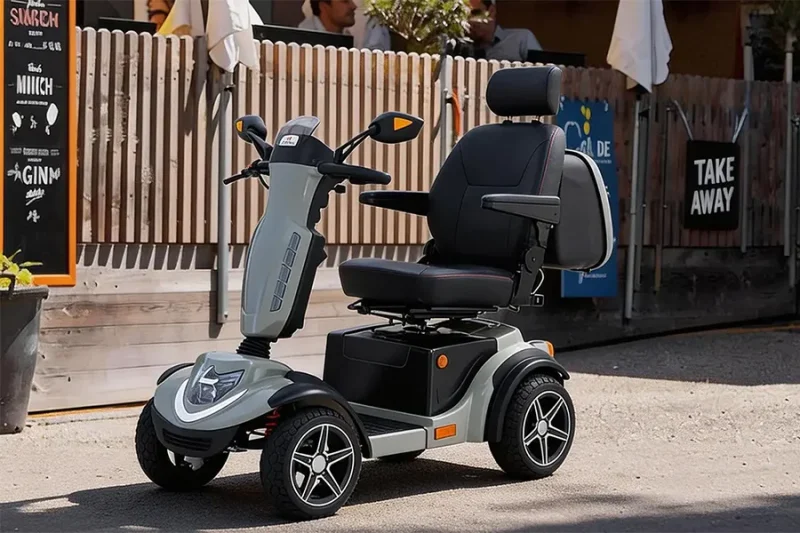
Mobility scooters are operated using a tiller handle, requiring both hands to steer and control. Electric wheelchairs use a joystick or specialized controller, allowing operation with one hand and accommodating users with limited upper body strength.
Speed and Range
Electric wheelchairs are typically limited to a maximum speed of 6 km/h and can travel up to 30 km on a single charge. Mobility scooters offer higher speeds, with many models reaching 14-17 km/h and ranges exceeding 60 km.
Portability and Maneuverability
Mobility scooters are often more portable than electric wheelchairs due to their lighter weight, and foldable models are excellent for frequent travelers. However, electric wheelchairs have a smaller turning circle, making them more suitable for indoor use.
Cost
Electric wheelchairs tend to be more expensive than mobility scooters, especially for models with specialized seating and positioning features.
Competitive Dynamics in 2026
Fragmentation and Margin Pressure
The growing availability of competing personal mobility solutions—including electric wheelchairs, foldable e-scooters, and mobility bikes—fragments the market and pressures profit margins. Lightweight electric wheelchairs increasingly offer comparable speed and range to entry-level scooters while providing superior indoor maneuverability. Stand-up e-scooters attract younger users considering mobility solutions for non-medical purposes.
Regulatory Classification Matters
In the EU, mobility scooters are classified as medical devices under MDR 2017/745, requiring stricter clinical evaluation and post-market surveillance. In the U.S., the FDA regulates mobility scooters as Class II medical devices. The regulatory status of each product category affects market access, pricing, and competitive positioning.
Technology Convergence
Smart technologies and IoT connectivity are creating new competitive dimensions. IoT-enabled devices can provide real-time battery monitoring, GPS navigation, remote diagnostics, and smartphone integration. Manufacturers incorporating smart functionality will capture premium market segments and build stronger customer loyalty.
Opportunities for Manufacturers
Despite intense competition, several opportunities exist for manufacturers who can differentiate effectively.
Smart Technology Integration
IoT-enabled scooters and wheelchairs can provide real-time battery monitoring, GPS navigation, geofencing alerts, and remote diagnostics. Smartphone integration allows users to track usage patterns, locate parked devices, and receive weather-adaptive route suggestions. These features also enable rental operators to manage fleets efficiently.
Battery Innovation
LFP (lithium iron phosphate) batteries are gaining traction for their superior thermal stability and extended lifespan. LFP batteries have an ultra-high thermal runaway threshold of 500-800°C, compared to 200-300°C for ternary lithium batteries. Manufacturers investing in battery innovation can differentiate on safety, longevity, and total cost of ownership.
Portable and Travel-Friendly Design
The portable mobility scooter market is growing rapidly, driven by demand for lightweight foldable scooters, compact travel-friendly designs, and expansion of e-commerce sales channels. Manufacturers that prioritize portability and travel compatibility can capture this fast-growing segment.
Compliance as Competitive Advantage
With regulatory requirements increasing in both the EU and U.S., manufacturers with established compliance infrastructure and validated reliability data will have a significant advantage. Compliance is no longer a background consideration—it is a core competitive arena requiring extensive lifecycle testing for durability and reliability.
What This Means for Ruidi and Its Partners
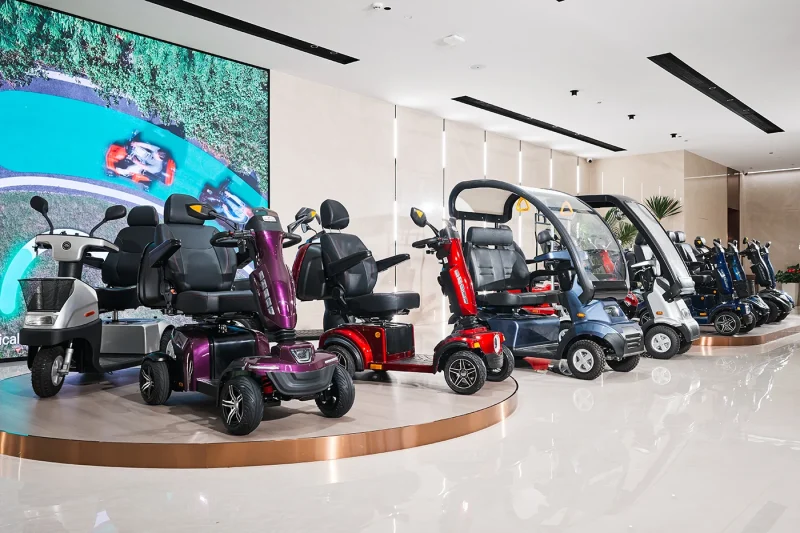
Ruidi operates at the intersection of these competitive dynamics. With CE, FDA, ISO 9001, and TUV 13485 certifications, Ruidi maintains compliance across both medical device and consumer product frameworks. The company’s product range spans portable, all-terrain, and heavy-duty segments, allowing partners to address diverse user needs.
Ruidi’s export experience across 70+ countries and its vertical integration from design to production enable dealers and distributors to bring differentiated products to market efficiently.
FAQ
Is a mobility scooter better than an electric wheelchair?
It depends on the user’s needs. Mobility scooters offer higher speed and longer range for outdoor use. Electric wheelchairs provide better indoor maneuverability and postural support.
How is the mobility device market changing in 2026?
The market is experiencing fragmentation, regulatory tightening, and technology convergence. Smart features, battery innovation, and compliance capabilities are becoming key differentiators.
What certification do mobility devices need for export?
For the EU, CE MDR certification is required. For the U.S., FDA registration and listing as a Class II medical device is required.
Learn More About Ruidi
Ruidi is a certified mobility scooter manufacturer and OEM/ODM partner serving global dealers and distributors. Contact us to learn more about our products, certifications, and export cooperation.
Demographics remain a key driver. By 2030, one in six people worldwide will be aged 60 years or over. Japan’s elderly share already reached 29.1% in 2023, and similar trends are accelerating across Asia-Pacific, Europe, and North America.