

All-Terrain Mobility Scooters: When You Need One
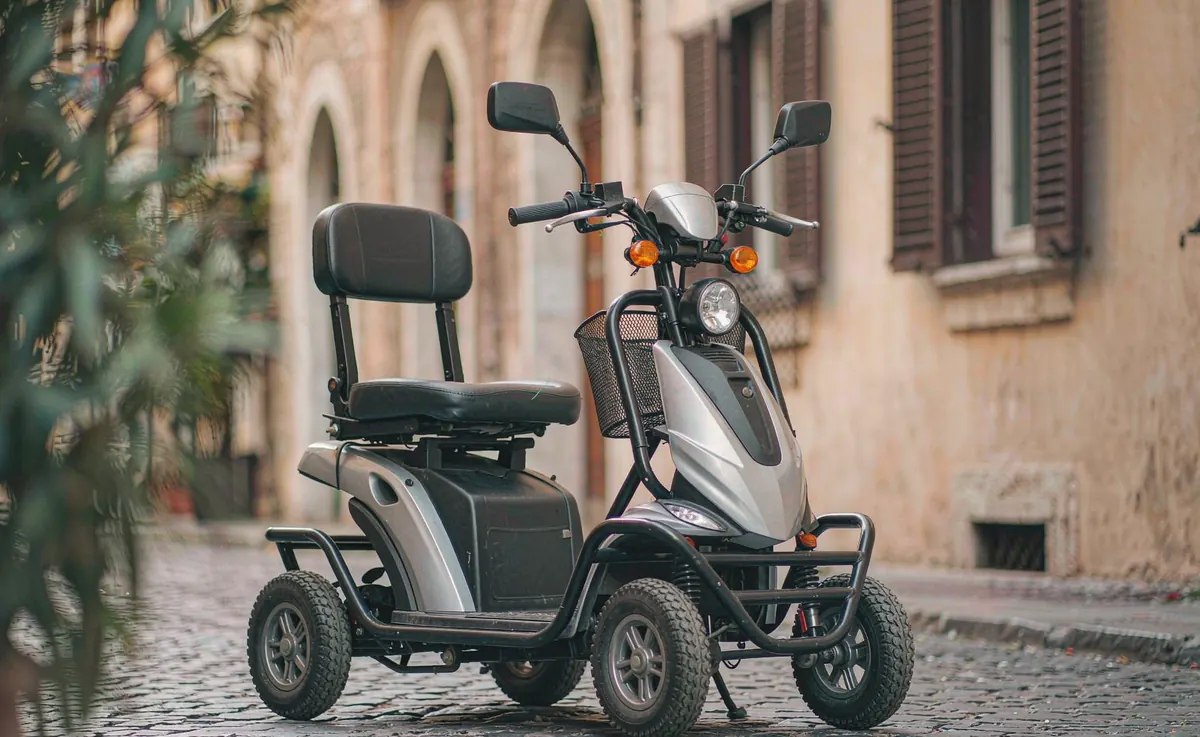
You need an all-terrain mobility scooter when the user regularly travels on surfaces beyond smooth pavement — gravel paths, grass, uneven sidewalks, ramps, or rural routes. Standard scooters handle flat, hard ground well; all-terrain models add larger wheels, higher ground clearance, and stronger suspension to stay stable and comfortable where ordinary scooters struggle.
What "all-terrain" actually means
An all-terrain scooter is not a different vehicle class — it is a scooter built with components that cope with variable ground: bigger pneumatic or solid tires, a reinforced frame, increased ground clearance, and a suspension system that absorbs bumps. The goal is safer, more comfortable travel on routes a standard model would avoid.
Where standard scooters struggle
- Loose surfaces: gravel, sand, dirt paths.
- Soft ground: grass, wet leaves, uneven lawns.
- Obstacles: kerb drops, tree roots, cobblestones.
- Long rural or park routes without smooth pavement.
Features that matter off-road
| Feature | Why it matters |
|---|---|
| Larger wheels | Better roll-over of small obstacles and softer ground |
| Ground clearance | Avoids scraping the chassis on roots or kerbs |
| Suspension | Comfort and stability on bumps |
| Motor torque | Climbs gentle slopes without strain |
How the RUIDI R68SPRO-Plus fits
Our all-terrain R68SPRO-Plus is positioned for users who need a rugged, stable scooter for mixed surfaces. It pairs a reinforced build with the comfort features RUIDI is known for, and sits within the same certified manufacturing system (CE EN 12184, ISO 9001/13485) as our other models. For smoother daily city use, the R9SPRO or R7SPRO may be the better everyday match.
Who benefits most
- Users in rural or semi-rural areas with unpaved routes.
- People who enjoy parks, markets, or campsites.
- Anyone whose daily path includes kerbs, slopes, or cobblestones.
- Care settings moving between indoor and outdoor terrain.
Pairing the right model to the user
Not every user needs all-terrain capability. If most travel is on pavements and inside buildings, a lighter model such as the R45SE or U3 is easier to transport and store. Choose all-terrain only when the routes demand it — see our full buying guide for a step-by-step decision.
Safety notes
Even rugged scooters have limits. Follow the manufacturer's guidance on slopes and surfaces, keep tires correctly inflated, and have the device serviced periodically. RUIDI's production system (37 patents, 30+ export countries, 5,000 units/month capacity) supports consistent spare-part availability across the range.
Frequently Asked Questions
Can all-terrain scooters be used on roads?
It depends on local regulation and the model's classification. Many mobility scooters are intended for pavements, paths, and private ground rather than public roads. Always check local rules and the manufacturer's usage guidance before road use.
Are all-terrain scooters heavier than standard scooters?
Generally yes. The larger wheels, reinforced frame, and suspension add weight. That trade-off delivers stability off-road but makes them less portable than compact travel models.
Do they work on grass or gravel?
Yes — that is their purpose. Larger wheels and clearance let them roll over grass, gravel, and dirt far better than a standard scooter, though very soft or deep ground can still be challenging.
What maintenance do larger wheels need?
Keep tire pressure correct (for pneumatic tires), inspect tread and bearings periodically, and follow the manufacturer's service interval. Suspension components should be checked during routine servicing.
Is the R68SPRO-Plus suitable for daily city use too?
It can be used in the city, but its rugged build is optimized for mixed and rougher surfaces. For predominantly smooth pavement, a lighter daily model such as the R9SPRO or R7SPRO is usually the more practical everyday choice.